Journal of Entrepreneurship and Business Development
Volume X, Issue X, Dec 2024, Pages 7-27
The role of leadership on sustainable performance: A bibliometric analysis and future research agenda
DOI: 10.18775/ijmsba.1849-5664-5419.2014.XX.100X
URL: http://dx.doi.org/10.18775/ijmsba.1849-5664-5419.2014.XX.100X
1Anna-Marie Namboga, 2*Asa Romeo Asa, 3Johanna Pangeiko Nautwima, 4Helvi Nyete Johannes
1Namibia Business School, University of Namibia, Windhoek 13301, Namibia, andre2marie@gmail.com
2,3,4Namibian-German Institute for Logistics, Namibia University of Science and Technology, Windhoek 13388, Namibia, romeoassa@gmail.com; jpnautwima@gmail.com; hnytjohnny@gmail.com

Abstarct: Sustainable leadership has become a central theme in addressing the growing demands for responsible governance, ethical practices, and long-term performance across sectors. Despite the expanding interest in this area, there remains a lack of systematic mapping of the scholarly developments connecting leadership to sustainable performance. To bridge this gap, this study conducts a comprehensive bibliometric analysis of 413 peer-reviewed articles indexed in the Scopus database and published between 1998 and 2024. Using performance analysis and science mapping techniques supported by VOSviewer and the Bibliometrix R package, the study explores publication trends, leading journals, influential authors, prominent institutions, global research collaborations, and thematic structures. The results show that sustainable development, sustainability management, and corporate social responsibility dominate the conceptual landscape, with emerging interest in sustainable leadership, ethical leadership, and responsible management. Influential articles are heavily concentrated in journals focusing on sustainability, corporate governance, and strategic leadership. Geographically, research is primarily driven by scholars from North America and Europe, with limited yet growing contributions from Asia and Africa. The findings reveal important gaps in methodological transparency, theoretical grounding, and inclusive authorship, especially in developing regions. This study advances the intellectual structure of leadership-sustainability research. It offers future research directions to deepen theoretical integration, diversify methodological approaches, and promote equitable global engagement in sustainable leadership discourse.
Keywords: Sustainable leadership, sustainable performance, bibliometric analysis, corporate social responsibility, ethical leadership, sustainability management, VOSviewer, Scopus
1. Introduction
Sustainable development has emerged as a critical global imperative, driven by increasing concerns over environmental degradation, socio-economic disparities, and the pressing need for long-term resilience. Since the adoption of the 2030 Agenda for Sustainable Development, which includes 17 Sustainable Development Goals (SDGs), countries and organizations alike have been called to align their strategies and operations with global sustainability targets (Nautwima et al., 2023; Piwowar-Sulej et al., 2021). Realizing these goals requires cohesive action from governments, institutions, and individuals to build resilient systems that address interconnected challenges such as climate change, poverty, inequality, and ecosystem degradation (Asa et al., 2024; Cesário et al., 2022; Jusoh et al., 2024). The corporate sector is particularly influential in integrating sustainability into strategic decision-making and operational practices (Scheyvens et al., 2016; Abshagen, 2018), primarily through leadership that drives sustainability-oriented innovation and transformation.
In this context, the role of sustainable leadership has gained increasing scholarly attention as a critical enabler of sustainable performance. Sustainable leadership is an approach that transcends short-term performance metrics by embedding long-term ecological, social, and economic objectives into organizational culture and operations (Iqbal et al., 2021). It involves guiding organizations with a strong sense of responsibility, adaptability, systems thinking, and ethical commitment, often exemplified through transformational, green, ethical, and responsible leadership styles (Agyabeng-Mensah et al., 2023; Asa, Nautwima, et al., 2023a; Iqbal, 2020; Suriyankietkaew, 2022). These leadership approaches emphasize inclusive decision-making, innovation, stakeholder engagement, and a strong ethical foundation that contributes to both organizational performance and societal wellbeing and environmental regeneration (Asad et al., 2021; Iqbal et al., 2020; Kantabutra et al., 2023; Milezi et al., 2023).
Recent literature affirms that sustainable leadership is pivotal in fostering corporate sustainability by embedding sustainability principles within organizational frameworks, advancing green innovation, and cultivating a culture of accountability and purpose (Cesário et al., 2022; Jusoh et al., 2024). Empirical studies have linked various leadership behaviors with sustainability outcomes, including psychological empowerment (Iqbal et al., 2020), employee engagement (Iqbal et al., 2023), green human resource practices (Asim et al., 2024), and environmental performance (Aftab, 2022; Awan et al., 2024). These studies underscore that sustainable leadership is not a static concept but a multidimensional construct involving strategic vision, mentoring, persuasion, adaptability, and collaborative action to achieve long-term sustainability (Iqbal et al., 2020; Jusoh et al., 2024). Despite growing research interest, the field remains fragmented, with limited synthesis of how sustainable leadership influences sustainable performance across sectors and contexts. Furthermore, existing reviews tend to adopt narrative or conceptual approaches that may overlook this rapidly evolving domain's broader structural and collaborative dimensions (Sobaih et al., 2022; Liao, 2022). Thus, a comprehensive mapping of the research landscape is critical to understand publication trends, dominant themes, collaborative networks, and knowledge gaps.
In addressing this need, this study systematically maps the scientific landscape of leadership and sustainable performance by identifying core themes, influential scholars, foundational contributions, methodological patterns, geographic contexts, and emerging scholarly directions in this dynamic and multidisciplinary field. Through applying advanced bibliometric techniques, including keyword co-occurrence mapping, bibliographic coupling, and collaboration network visualization, the analysis uncovers dominant and emerging clusters, thematic evolutions, and intellectual linkages that define the structure and development of research on sustainable leadership. These methods, operationalized through VOSviewer and Biblioshiny, enable the processing of large-scale bibliometric datasets in a transparent and reproducible manner, offering comprehensive insights into the trajectory and knowledge gaps within the domain (Aria & Cuccurullo, 2017; Donthu et al., 2021; Jusoh et al., 2024). Specifically, this study addresses six research questions aimed at enriching theoretical understanding and guiding empirical investigation in the area of leadership and sustainability:
RQ1. What are the annual publication trends in leadership and sustainable performance research?
RQ2. What are the most influential articles, and which journals have significantly contributed to the field?
RQ3. Who are the research domain's most prolific authors, institutions, and countries?
RQ4. What are the most significant international collaborations shaping the research on sustainable leadership?
RQ5. What are the field's prevailing clusters, recurring keywords, and thematic structures?
RQ6. What future research directions can be identified to advance the scholarly agenda?
The findings of this bibliometric study provide valuable insights for multiple stakeholders. Both novice and seasoned academics can use the results to navigate the evolving research landscape, identify theoretical foundations, and pinpoint research opportunities that promise the most scholarly and societal impact. Practitioners and policymakers may benefit from identifying best practices, conceptual models, and empirically grounded evidence to inform decision-making and institutional strategies. Moreover, the study reveals critical research voids that warrant attention, providing a roadmap for future inquiry and innovation in leadership and sustainability.
The remainder of this paper proceeds as follows: a theoretical overview of leadership and sustainable performance is presented first, followed by the research methodology and detailed bibliometric findings. The paper concludes by discussing thematic insights and a forward-looking research agenda derived from synthesizing current scholarly trends.
2.Theoretical background
Leadership and sustainability are essential components of sustainable development. Considering this, the following subsections delve into sustainable leadership, sustainable performance, and the confluence of leadership and sustainable performance.
2.1. Sustainable leadership
Hargreaves and Fink (2004) and Avery (2005) introduced the concept of sustainable leadership by combining the concepts of sustainable development and leadership (Liao, 2022). Bendell et al. (2017) defined sustainable leadership as any ethical conduct with the intention and effect of assisting groups of people in addressing shared dilemmas in significant ways that would not otherwise be achieved. Sustainable leadership is a concept that has emerged as a response to the changing and demanding market landscape, driven by various factors, including globalization, complexity, instability, technological advancements, high-performance pressure, weariness, and deviant actions (Waqar et al., 2024). Avery (2005) highlighted that sustainable leadership entails the ability to make decisions over an extended period, the promotion of systematic innovation, the cultivation of a staff team that is loyal to the organization, and the provision of high-quality goods, services, and solutions (Liao, 2022; Tjizumaue et al., 2023). The repercussions of sustainable practices are measured in terms of financial performance, environmental impacts, social impact, long-term viability, and resilience. Sustainable leadership affects four factors: an individual, a team, an organisation, and a community (Nisha et al., 2022). The purpose of sustainable leadership is to balance the relationship between people, profits, and the planet, and promote the sustainability of enterprises through corresponding management practices (Asa et al., 2022; Liao, 2022). Sustainable leadership increases organizational performance by reducing costs and increasing potential revenue (Iqbal et al., 2020). Sustainability leadership fosters long-term economic, social, and environmental development. Sustainable leadership emerges as a vital concept for promoting ethical and adaptive leadership to address the growing complexity and unpredictability in today's business and societal landscape, ultimately aiding in achieving sustainable development goals.
2.2. Sustainable performance
Sustainability performance refers to a company's performance related to economic, environmental, and social aspects (Abdul-Rashid et al., 2017; Iqbal et al., 2020; Nguyen, 2019; Zimek & Baumgartner, 2017). Sustainability performance involves a wide range of metrics, including emission levels and resource conservation efforts; employment characteristics; occupational health and safety; relationships with the community and society; stakeholder engagement; and economic impacts of the organization beyond those measured by financial metrics (Burawat, 2019). Elkington (1998) posits that to drive organizations to prioritize sustainability, they must implement substantial modifications to their approach to the triple bottom line dimensions, encompassing environmental, economic, and social factors (Iqbal et al., 2020; Nguyen, 2019). Any organisation's sustainable performance is contingent upon its employees' working behaviour, directly or indirectly linked to its climate (Asa, Yusupov, et al., 2023; Huo et al., 2023). Organizations must seek collaborative partnerships among their stakeholders to improve sustainability at the individual and organizational levels (Iqbal et al., 2019). Sustainable performance is a business strategy that enables organizations to derive competitive and reputational advantages (Huo et al., 2023). Sustainable performance facilitates the success and profitability of organizations while being cautious about environmental impacts, employee wellbeing, and social contributions.
2.3. Sustainable leadership and sustainable performance
Sustainable performance is primarily associated with sustainable leadership, which suggests that sustainable development involves the integration of economic, social, and environmental goals (Piwowar-Sulej & Iqbal, 2023). Sustainable leaders drive performance by fostering innovation, engaging stakeholders, and implementing responsible business practices that foster long-term growth without depleting resources or damaging future generations. Thus, scholars have extensively explored the intersection of sustainable leadership and sustainability.
Prior studies on bibliometric analysis on sustainable leadership and sustainability focused on different methods or timeframes apart from the one covered in this study. For instance, Purnomo et al. (2021) mapped the status of the study conducted in the past 21 years at the global level based on sustainable leadership. The study collected data from Scopus, utilized document search queries, and analyzed them using bibliometric techniques. Data analysis and visualisation were utilised with the VOSviewer program and applied to 159 documents from the Scopus database from 1998 through 2019.
Similarly, Jusoh et al. (2024) focused on sustainable leadership. They conducted a comprehensive bibliometric analysis of sustainable leadership using 254 documents from the Scopus database issued from 1991 to 2024, which were analyzed using VOSviewer software. Additionally, Udin (2024) conducted a bibliometric analysis to examine the trends of various leadership styles, specifically authentic, sustainable, transformational, transactional, and servant leadership, and their relationship with sustainable performance, providing valuable insights into the scholarly landscape surrounding this critical intersection. The study found 106 relevant documents from the Scopus scientific database, covering 2010 and 2024. The study visualized the data using VOSviewer software to represent the relationships and patterns within the data.
The literature revealed a growing body of scholarly interest in sustainable leadership. Few studies (Purnomo et al., 2021; Jusoh et al., 2024; Udin, 2024) have used bibliometric tools to explore leadership in sustainability contexts, contributing to the foundational insight. However, the existing bibliometric analysis focused primarily on general trends within sustainable leadership or leadership styles. It relied on a restricted scope of their data samples, where the studies only involved fewer than 500 documents. Although these few samples are methodologically reliable, they may not fully capture the increasing volume and diversity of the intersection of sustainable leadership and sustainable performance in the global research body. Therefore, the present study aims to fill these gaps by examining over 500 documents to offer an expanded and reflective view on the intersection of sustainable leadership and sustainable performance. The enlarged dataset will enhance the robustness of the statistical findings, boost the accuracy of trend identification, and raise the possibility of spotting new themes, underrepresented areas, and elevation of terminology, which smaller samples' bibliometric analysis studies may omit. Sustainable leadership and sustainable performance are crucial concepts, and their intersection drives transformational changes in organizations and societies. Analyzing the intersection of these two concepts adds knowledge to the field and provides frameworks needed by policymakers, practitioners, and managers to build resilient, equitable, and environmentally responsible systems. Authors should review relevant literature and emphasize the gaps in the existing literature that justify the study. Additionally, rigorous review should be performed, and key publications cited. Theoretical foundation of the study should be discussed and the research model constructed.
3. Research Methodology
3.1. Design and search strategy
Our design and search strategy followed the PRISMA guidelines (Moher et al., 2009). We searched the Scopus database for records published between 1998 and October 2024 using relevant terms in the title and abstract, as shown in Table 1. A total of 525 documents were included in the final analysis after filtering and screening from the initial 1,586 records retrieved from Scopus.
Table 1: Design and search strategy
| Filtering criteria | Exclude | Include |
| Search engine: Scopus
Search date: 03-10-2024 Search period: 1988 - 2024 Search term: (("Sustainable Leadership" OR "Sustainability Management" OR "Environmental Leadership" OR "Eco-leadership" OR "Green Leadership" OR "Sustainability Governance" OR "Leadership for Sustainability" OR "Sustainable Organizational Leadership" OR "Corporate Sustainability Leadership" OR "Responsible Leadership" OR "Socially Responsible Leadership" OR "Ethical Leadership" OR "Leadership in Sustainability" OR "Strategic Sustainability Leadership" OR "Transformational Leadership in Sustainability" ) AND ( "sustainable performance" OR "Sustainable Development" OR "Sustainability Outcomes" OR "Sustainable Success" OR "Sustainable Efficiency" OR "Environmental Performance" OR "Ecological Performance" OR "Sustainability Performance" OR "Sustainable Practices" OR "Sustainable Results" OR "Long-term Performance" OR "Responsible Performance" OR "Green Performance" OR "Resource-efficient Performance" OR "Socially Responsible Performance" OR "Performance Sustainability")) |
1586
|
|
| Subject area: Business, Management and Accounting; Economics; Econometrics and Finance; Social Sciences | 931 | 655
|
| Document type: Articles, Conference papers, and Reviews | 119 | 536 |
| Language screening: English only | 7 | 529 |
| Erroneous records screening: Include documents with valid author information only, and delete duplicates | 4 | 525 |
| Total Selected Documents | 525 | |
Source: Authors’ computation from literature (2024)
3.2. Techniques for analysis
To address the research objectives with analytical rigor, this study employed a dual-method bibliometric strategy by integrating VOSviewer software (Van Eck & Waltman, 2010) and the Bibliometrix R-package executed through the Biblioshiny web interface (Aria & Cuccurullo, 2017). These tools facilitated a transparent, systematic, and replicable exploration of the research landscape on leadership and sustainable performance, enabling both performance analysis and science mapping. Performance analysis was applied to examine quantitative indicators such as publication output by year, most influential articles, prolific authors, impactful journals, contributing institutions, and countries with significant research output. These indicators helped characterize the evolution, growth, and global distribution of research within the domain, thereby offering critical insights into its productivity and scholarly impact (Cobo et al., 2011; Donthu et al., 2021).
Science mapping was used to uncover the intellectual and conceptual structure of the field. This included keyword co-occurrence analysis, which revealed dominant themes and research on sustainable leadership and performance. Using the fractional counting method, a keyword co-occurrence network was generated to highlight the total link strength (TLS) between concepts and their clusters. A thematic evolution map was also developed to trace chronological progression and conceptual shifts in research themes. Network analysis techniques, such as bibliographic coupling and country collaboration mapping, were employed using VOSviewer to visualize the proximity and influence among authors, institutions, and national research networks. These approaches contributed to identifying core clusters, emerging themes, and patterns of scholarly collaboration, thereby enriching the understanding of knowledge production and diffusion mechanisms in this field. Finally, the Bibliometrix tool supported the temporal and structural analysis of keywords and research clusters, enabling the identification of thematic developments and gaps. Combining these techniques provided a comprehensive methodological basis to interpret the current state and future trajectory of scholarship on leadership and sustainable performance.
4. Results
4.1. Publication trend for sustainable leadership and sustainable performance
Figure 1 illustrates the year-wise publication trend of research on sustainable leadership (SL) and sustainable performance (SP). The figure shows that the field has witnessed a consistent and significant rise in academic interest over the past 27 years (1998–2024). The earliest record in a Scopus-indexed journal appeared in 1998, with just one publication, followed by sporadic outputs throughout the early 2000s, where annual publication counts remained at or below five articles per year. The trend remained relatively flat until 2008, after which the number of publications began to increase steadily, reaching eight articles in 2010 and 14 by 2013. A turning point is evident in 2015, coinciding with the global adoption of the United Nations Sustainable Development Goals (SDGs). This milestone appears to have catalyzed a wave of scholarly engagement, reflected by a rise from 26 publications in 2015 to 41 in 2017. Between 2018 and 2024, the field began expanding, with annual publications ranging from 33 to 67, indicating a sharp and sustained surge in research output. The peak was reached in 2024, with 67 articles published, the highest annual total to date. This final period of the corpus (2019–2024) accounts for 256 of the 525 documents analyzed, representing 49% of the total sample, confirming that nearly half of the literature has emerged in just the last six years. This trend suggests that sustainability-driven leadership is becoming a dominant concern in academic, policy, and business discourses in response to global challenges such as climate change, Environmental, Social, and Governance (ESG) integration, and stakeholder-driven governance.
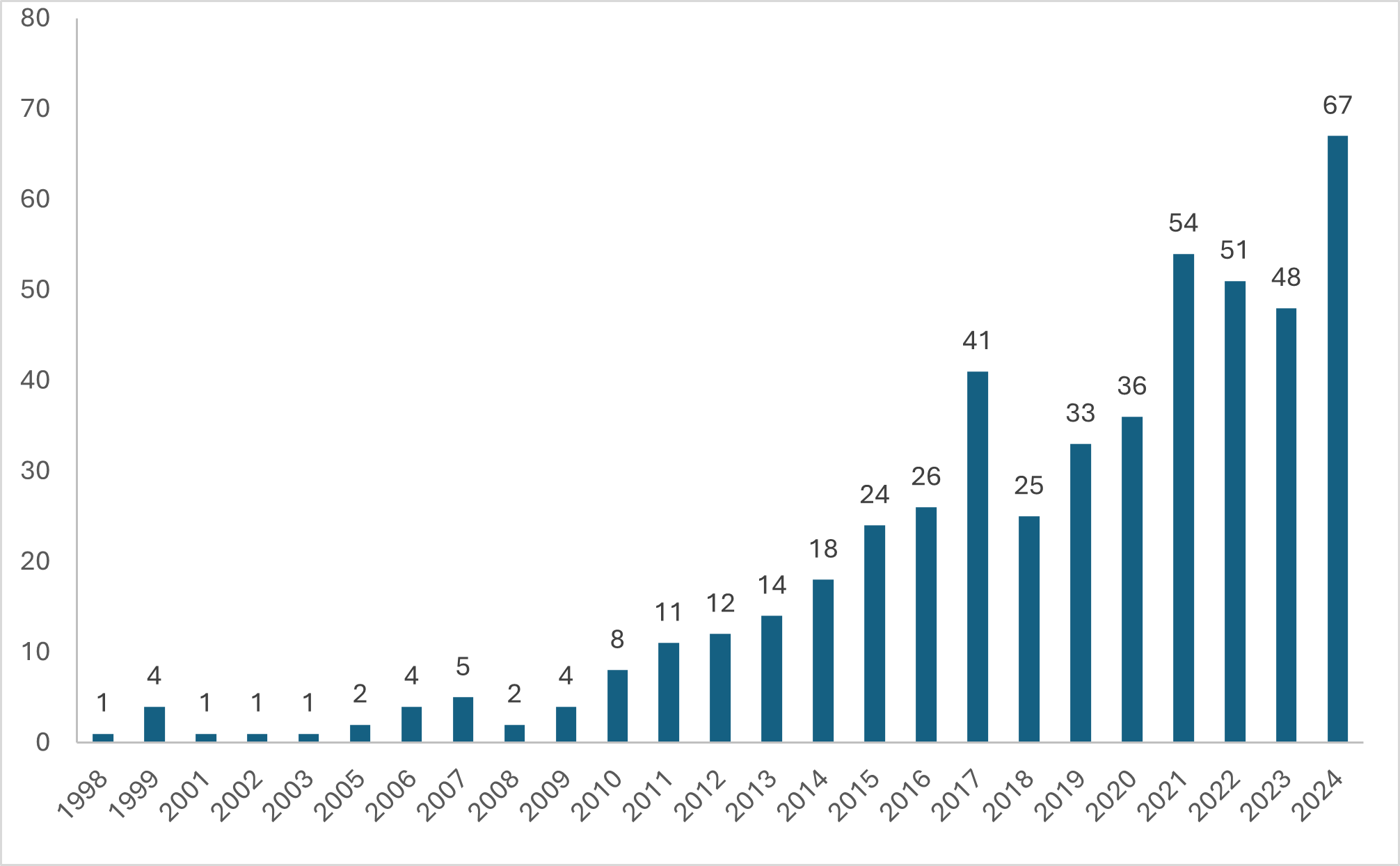
Fig. 1: Year-wise publication for SL and SP research between 1988 and 2024
Source: Authors’ computation from literature (2024)
4.2. Top impactful articles on sustainable leadership and sustainable performance
Table 2 presents the most influential articles in sustainable leadership and sustainable performance, as measured by total citations. The most cited article in the dataset is by Seuring (2013b), titled Sustainability management beyond corporate boundaries: From stakeholders to performance, which has garnered 854 citations. This study has had a significant impact in advancing stakeholder theory and performance integration beyond the boundaries of individual firms, underlining the systemic nature of sustainability leadership. The second most cited article, with 605 citations, is by Dyllick and Muff (2016), who introduced a typology of sustainable business models ranging from conventional practices to true business sustainability. This paper has become foundational for categorizing leadership models according to their strategic alignment with sustainability goals. Following closely is the article by Hörisch, Freeman, and Schaltegger (2014), which received 530 citations and contributed a conceptual framework linking stakeholder theory with sustainability management. In the fourth place, Garcia et al. (2017) demonstrated how sensitive industries in emerging markets tend to show superior environmental, social, and governance (ESG) performance, receiving 520 citations. Baumgartner’s (2014) work proposing a comprehensive framework that integrates corporate values, strategy, and CSR tools ranks fifth, with 501 citations, reinforcing the importance of internal organizational alignment for sustainable outcomes.
Székely and Knirsch (2005) also stand out with their theoretical model on sustainability in the automotive sector, having amassed 500 citations, highlighting the relevance of sector-specific approaches in sustainability leadership. Another highly influential article by Baumgartner et al. (2017) focused on strategic perspectives in corporate sustainability and received 418 citations, indicating the growing interest in the strategic leadership dimension. Brown et al. (2009) analyzed institutional mechanisms related to sustainability reporting, particularly the role of the Global Reporting Initiative (GRI), and this work received 417 citations, showing the importance of transparency and standard-setting in sustainable governance. Jose and Lee’s (2007) study on corporate environmental reporting practices, based on web disclosures, received 350 citations, while Williams et al. (2017) contributed a systems thinking approach to sustainability research, gaining 345 citations. Another notable contribution is from Schaltegger and Wagner (2006), who explored performance measurement and integrative management approaches, which have been cited 338 times. Macke and Genari (2019) followed with a systematic literature review on sustainable human resource management, receiving 327 citations and reinforcing the connection between HRM and sustainability leadership. Peters and Romi (2015) examined sustainability governance structures and the assurance of sustainability reports, resulting in 308 citations. Starik and Kanashiro (2013) proposed a new theory of sustainability management, a conceptual piece that has gained 296 citations. Seuring (2013a) also appears again with a separate review on modelling approaches in sustainable supply chain management, contributing 281 citations to the corpus.
More recent work by Al-Swidi et al. (2021) examined the joint influence of green HRM, leadership, and culture on employee behavior and environmental performance, receiving 273 citations, showing the traction gained by integrated leadership approaches in environmental sustainability. Nguyen et al. (2021) analyzed financial and environmental performance in heavily polluting industries in China, earning 269 citations, which underscores the empirical relevance of sustainability governance in high-risk sectors. Siebenhüner and Arnold (2007) offered a learning perspective for managing sustainability in organizations, contributing 261 citations to the literature. Similarly, Maas et al. (2016) linked sustainability assessment with management control and reporting, also cited 257 times. Lastly, Schaltegger and Csutora (2012b) provided a comprehensive review of carbon accounting practices in sustainability management, reaching 257 citations.
Overall, these top twenty articles represent the intellectual core of sustainable leadership and performance research. They collectively reflect a strong integration of stakeholder theory, systems thinking, performance measurement, green human resource management, and sustainability governance. The high citation counts underscore these works' continued academic relevance and practical significance, establishing a solid foundation upon which future research agendas may be built.
Table 2: Top impactful articles on sustainable leadership and sustainable performance
| Rank | Author | Title | TC |
| 1 | Seuring (2013b) | Sustainability management beyond corporate boundaries: From stakeholders to performance | 854 |
| 2 | Dyllick & Muff (2016) | Clarifying the Meaning of Sustainable Business: Introducing a Typology from Business-as-Usual to True Business Sustainability | 605 |
| 3 | Hörisch et al. (2014) | Applying Stakeholder Theory in Sustainability Management: Links, Similarities, Dissimilarities, and a Conceptual Framework | 530 |
| 4 | Garcia et al. (2017) | Sensitive industries produce better ESG performance: Evidence from emerging markets | 520 |
| 5 | Baumgartner (2014) | Managing corporate sustainability and CSR: A conceptual framework combining values, strategies, and instruments contributing to sustainable development | 501 |
| 6 | Székely & Knirsch (2005) | Sustainability management in the global automotive industry: A theoretical model and survey study | 500 |
| 7 | Baumgartner et al. (2017) | Strategic perspectives of corporate sustainability management to develop a sustainable organization | 418 |
| 8 | Brown et al. (2009) | Building institutions based on information disclosure: lessons from GRI's sustainability reporting | 417 |
| 9 | Jose & Lee (2007) | Environmental reporting of global corporations: A content analysis based on Website disclosures | 350 |
| 10 | Wiilliams et al. (2017) | Systems thinking: A review of sustainability management research | 345 |
| 11 | Schaltegger & Wagner (2006) | Integrative management of sustainability performance, measurement and reporting | 338 |
| 12 | Macke & Genari (2019) | Systematic literature review on sustainable human resource management | 327 |
| 13 | Peters & Romi (2015) | The association between sustainability governance characteristics and the assurance of corporate sustainability reports | 308 |
| 14 | Starik & Kanashiro (2013) | Toward a Theory of Sustainability Management: Uncovering and Integrating the Nearly Obvious | 296 |
| 15 | Seuring (2013a) | A review of modeling approaches for sustainable supply chain management | 281 |
| 16 | Al-Swidi et al. (2021) | The joint impact of green human resource management, leadership and organizational culture on employees’ green behavior and organizational environmental performance | 273 |
| 17 | Nguyen et al. (2021) | Environmental performance, sustainability, governance and financial performance: Evidence from heavily polluting industries in China | 269 |
| 18 | Siebenhüner & Arnold (2007) | Organizational learning to manage sustainable development | 261 |
| 19 | Maas et al. (2016) | Integrating corporate sustainability assessment, management accounting, control, and reporting | 257 |
| 20 | Schaltegger & Csutora (2012b) | Carbon accounting for sustainability and management. Status quo and challenges | 257 |
Note(s):TC: Total Citations
Source: Authors’ computation from literature (2024)
4.3. Top contributing sources on SL and SP research by TP and TC
Table 3 shows that the corpus of 525 documents on sustainable leadership and sustainable performance was published across various journals and conference proceedings. The top 20 contributing sources in the table accounted for a significant portion of the total citations in the field, indicating both productivity and influence. The Journal of Research in Interactive Marketing ranks first, with 19 publications accumulating 1,509 citations, reflecting its central role in shaping discourse at the intersection of leadership, sustainability, and consumer engagement. This is followed by the Journal of Business Research, with 14 articles and 1,307 citations, and the Journal of Interactive Marketing, with six publications generating 1,374 citations, demonstrating high citation impact despite a smaller output. Other notable contributors include Psychology and Marketing (6 publications, 983 citations) and Management Science (4 publications, 827 citations), indicating the relevance of sustainability leadership topics in top-tier interdisciplinary and behavioral journals. These journals have been influential in advancing theoretical frameworks and empirical applications linking leadership, consumer psychology, and sustainability outcomes.
The Journal of Retailing and Consumer Services, another key outlet, published seven articles with 276 citations, further reinforcing the importance of marketing and retail perspectives in understanding sustainable performance. Additionally, Marketing Intelligence and Planning (6 publications, 516 citations) and Industrial Marketing Management (6 publications, 412 citations) contributed significantly to applied marketing scholarship on leadership-driven sustainability practices. While some journals, such as Sustainability (Switzerland) (8 articles, 85 citations), Cogent Business and Management (6 articles, 83 citations), and Emerald Emerging Markets Case Studies (6 articles, 11 citations), produced higher volumes of work, their relatively lower citation counts may indicate more recent contributions or niche audiences. Less impactful sources in terms of citations include Innovative Marketing, Journal of Digital and Social Media Marketing, and International Journal of Applied Business and Economic Research, each with fewer than 20 citations across three to five articles. Nonetheless, their inclusion signals a growing interest in the field from emerging and practice-oriented platforms.
Overall, the top 20 journals collectively demonstrate that sustainable leadership and performance research is thematically dispersed and increasingly mainstreamed across high-impact academic outlets in marketing, management, and sustainability. The presence of several journals with over 1,000 citations also highlights the high influence of select flagship articles, affirming the maturity and interdisciplinary appeal of the field.
Table 3: Top contributing sources on SL and SP research by TP
| Rank | Sources | TP | TC |
| 1 | Journal of Research in Interactive Marketing | 19 | 1509 |
| 2 | Journal of Business Research | 14 | 1307 |
| 3 | Springer Proceedings in Business and Economics | 9 | 13 |
| 4 | Sustainability (Switzerland) | 8 | 85 |
| 5 | Journal of Retailing and Consumer Services | 7 | 276 |
| 6 | Cogent Business and Management | 6 | 83 |
| 7 | Emerald Emerging Markets Case Studies | 6 | 11 |
| 8 | Industrial Marketing Management | 6 | 412 |
| 9 | Journal of Interactive Marketing | 6 | 1374 |
| 10 | Marketing Intelligence and Planning | 6 | 516 |
| 11 | Psychology and Marketing | 6 | 983 |
| 12 | Innovative Marketing | 5 | 10 |
| 13 | Journal of Digital and Social Media Marketing | 5 | 6 |
| 14 | Journal of Product and Brand Management | 4 | 179 |
| 15 | Management Science | 4 | 827 |
| 16 | European Journal of Marketing | 3 | 55 |
| 17 | International Journal of Applied Business and Economic Research | 3 | 0 |
| 18 | International Journal of Recent Technology and Engineering | 3 | 0 |
| 19 | International Review of Management and Marketing | 3 | 21 |
| 20 | Internet Research | 3 | 285 |
| Note(s): TP: Total Publications; TC: Total Citations | |||
Source: Authors’ computation from literature (2024)
Additionally, Table 4 presents the top twenty sources ranked by total citations, offering insights into the journals that have had the most academic impact within the field of sustainable leadership and sustainable performance. The Journal of Research in Interactive Marketing is the most influential source, contributing nineteen publications that have collectively received 1,509 citations. This positions it as a leading journal in the field, both in terms of output and scholarly impact. The Journal of Interactive Marketing follows closely, with only six articles but a high citation count of 1,374, indicating the presence of highly cited and influential contributions. The Journal of Business Research ranks third, with fourteen publications amassing 1,307 citations, confirming its central role in disseminating research that links sustainability with broader themes in business and management. Psychology and Marketing appears next with six articles and 983 citations, demonstrating strong engagement with behavioral and consumer dimensions of sustainable leadership. Management Science, a prominent generalist journal, also contributes significantly with four publications and 827 citations, suggesting the high impact of select contributions within its broader disciplinary scope. With three articles and 574 citations, Social Network Analysis and Mining reflects the field's methodological expansion into network analysis and data-driven sustainability research.
Other influential journals include Marketing Intelligence and Planning, which produced six articles cited 516 times, and Industrial Marketing Management, which has six publications and 412 citations, highlighting a sustained interest in the intersection of industrial strategy, leadership, and sustainability. Although represented by only two articles, the Journal of the Academy of Marketing Science stands out with 317 citations, pointing to the strength of individual high-impact contributions. Similarly, with three articles and 285 citations, Internet Research confirms the growing relevance of digital research spaces in sustainability and leadership studies. Further down the ranking, the Journal of Retailing and Consumer Services contributes seven articles that received 276 citations, followed by the Journal of Product and Brand Management, with four articles and 179 citations. The Journal of Marketing Communications and Information Systems Research contributes one and two articles, respectively, each receiving more than 120 citations. Other journals such as Online Information Review, International Journal of Retail and Distribution Management, and the Journal of Hospitality and Tourism Technology have each contributed two articles, receiving between 117 and 126 citations. The Service Industries Journal, with one article and 105 citations, and the Journal of Consumer Marketing and Journal of Global Fashion Marketing, each with two articles and around 100 citations, round out the list.
This analysis shows that total citation influence in sustainable leadership and performance research does not solely depend on the number of published articles. Several journals with relatively few publications have generated substantial citation counts, indicating their published work's high quality and relevance. The presence of journals spanning marketing, management, behavioral science, and information systems further highlights the multidisciplinary nature of the field and its wide-reaching theoretical and practical applications.
Table 4: Top contributing sources on SL and SP research by TC
| Rank | Sources | TP | TC |
| 1 | Journal of Research in Interactive Marketing | 19 | 1509 |
| 2 | Journal of Interactive Marketing | 6 | 1374 |
| 3 | Journal of Business Research | 14 | 1307 |
| 4 | Psychology and Marketing | 6 | 983 |
| 5 | Management Science | 4 | 827 |
| 6 | Social Network Analysis and Mining | 3 | 574 |
| 7 | Marketing Intelligence and Planning | 6 | 516 |
| 8 | Industrial Marketing Management | 6 | 412 |
| 9 | Journal of The Academy of Marketing Science | 2 | 317 |
| 10 | Internet Research | 3 | 285 |
| 11 | Journal of Retailing and Consumer Services | 7 | 276 |
| 12 | Journal of Product and Brand Management | 4 | 179 |
| 13 | Journal of Marketing Communications | 2 | 154 |
| 14 | Information Systems Research | 1 | 126 |
| 15 | Online Information Review | 2 | 119 |
| 16 | International Journal of Retail and Distribution Management | 2 | 118 |
| 17 | Journal of Hospitality and Tourism Technology | 2 | 117 |
| 18 | Service Industries Journal | 1 | 105 |
| 19 | Journal of Consumer Marketing | 2 | 101 |
| 20 | Journal of Global Fashion Marketing | 2 | 99 |
Note(s): TP: Total Publications; TC: Total Citations
Source: Authors’ computation from literature (2024)
4.4. Top contributing authors for SL and SP research
Table 5 presents the most prominent authors in the field of sustainable leadership and sustainable performance based on total publications (TP), total citations (TC), and total link strength (TLS). The analysis reveals that Schaltegger, Stefan emerges as the most prolific and impactful author, with 15 publications, 2,666 total citations, and the highest TLS of 225, indicating both scholarly productivity and strong collaborative ties in the field. Seuring, Stefan follows with three publications and a significant 1,259 citations, demonstrating high impact despite a smaller number of outputs. Likewise, Baumgartner, Rupert J., and Hörisch, Jacob each have 3 and 4 publications, respectively, with 965 and 930 citations, marking them as influential voices in sustainability performance discourse. Authors such as Freeman, R. Edward, Dyllick, Thomas, and Muff, Katrin, each with only two publications, also demonstrate notable influence, with 772 and 675 citations, respectively. Their strong citation profiles and moderate TLS values (ranging from 17 to 35) underscore their thought leadership in conceptualizing the integration of sustainability into corporate governance and strategic leadership. Among the emerging scholars, Iqbal Qaisar stands out with 12 publications, 540 citations, and a high TLS of 96, highlighting consistent research output and a growing citation network, particularly in green leadership and sustainable human resource practices. Similarly, Lee, Ki-Hoon has made a notable contribution with five publications, 462 citations, and a TLS of 29, indicating steady growth in scholarly and citation influence.
Authors such as Garcia, Alexandre Sanches, Mendes-da-Silva, Wesley, and Orsato, Renato, each represented by single publications with 520 citations, demonstrate the impact of high-quality two contributions in shaping the theoretical foundation of the field. Collectively, the top 20 authors in the domain of sustainable leadership and sustainable performance contributed 70 publications and accumulated over 13,000 citations, highlighting the concentrated intellectual influence shaping the discourse. Their high citation-to-publication ratios and link strengths reflect a research community that is both influential and interconnected, actively driving forward theoretical, empirical, and practical advancements in sustainability-focused leadership studies.
Table 5: Top contributing authors on SL and SP research
| Rank | Authors | TP | TC | TLS |
| 1 | Schaltegger, Stefan | 15 | 2666 | 225 |
| 2 | Seuring, Stefan | 3 | 1259 | 27 |
| 3 | Baumgartner, Rupert J. | 3 | 965 | 5 |
| 4 | Hörisch, Jacob | 4 | 930 | 32 |
| 5 | Freeman, R. Edward | 2 | 772 | 17 |
| 6 | Dyllick, Thomas | 2 | 675 | 35 |
| 7 | Muff, Katrin | 2 | 675 | 35 |
| 8 | Rauter, Romana | 2 | 551 | 3 |
| 9 | Iqbal, Qaisar | 12 | 540 | 96 |
| 10 | Garcia, Alexandre Sanches | 1 | 520 | 3 |
| 11 | Mendes-Da-Silva, Wesley | 1 | 520 | 3 |
| 12 | Orsato, Renato | 1 | 520 | 3 |
| 13 | Székely, Francisco | 1 | 500 | 0 |
| 14 | Lee, Ki-Hoon | 5 | 462 | 29 |
| 15 | Brown, Halina Szejnwald | 1 | 417 | 5 |
| 16 | De Jong, Martin | 1 | 417 | 5 |
| 17 | Levy, David L. | 1 | 417 | 5 |
| 18 | Ahmad, Noor Hazlina | 4 | 372 | 48 |
| 19 | Crutzen, Nathalie | 2 | 345 | 53 |
| 20 | Kennedy, Steve | 1 | 345 | 12 |
| Note(s): TP: Total publications; TC: Total Citations; TLS: Total Link Strength | ||||
Source: Authors’ computation from literature (2024)
4.5. Top impactful institutions on SL and SP research
Table 6 presents the most impactful institutions contributing to research on sustainable leadership and sustainable performance. Notably, all listed institutions have contributed one highly cited publication, indicating that while volume may be low, the citation impact per output is exceptionally high, reflecting strong academic influence. The most influential institution is East Carolina University, United States, with a single article that has garnered 821 citations, positioning it at the top of the ranking. This is followed closely by Northwestern University (USA) and its affiliated departments, including the Department of Integrated Marketing Communication and the Marketing Department, each contributing a publication with 714 citations. Similarly, the Department of Media Management at the University of Hamburg, Germany, also achieved 714 citations, reflecting significant impact within the European context.
Other prominent institutions include ETH Zürich, Switzerland, with 564 citations, and a cluster of U.S.-based institutions such as JD.com, American Technology Corporation, Stanford Graduate School of Business, and Carnegie Mellon University, each with 553 citations. This indicates American institutions' strong presence and influence in shaping sustainability and leadership research, often through interdisciplinary contributions in marketing, technology, and management domains. Institutions from South Korea, including the Department of Business Administration at Changwon National University and the Department of Clothing and Textiles at Yonsei University, also appear prominently with 457 citations each. This suggests growing academic engagement in East Asia with sustainability leadership themes, particularly within applied and consumer-oriented disciplines. Other institutions such as the University of Vaasa (Finland), Montpellier Business School (France), the University of Cyprus, and the Indian Institute of Technology Roorkee (India) are each represented by impactful single publications ranging between 267 and 316 citations, highlighting the global breadth of high-impact contributions across Europe and Asia.
Cumulatively, these top 20 institutions reflect a high concentration of citation influence within North America and Europe, with selected contributions from Asia. While the data shows a lack of institutional dominance in terms of publication volume, the exceptionally high citation counts per institution underscore the value of high-quality, single contributions in elevating institutional reputation in the sustainability and leadership research domain. Notably, no African institutions appear in the top 20 list, pointing to a geographical citation gap in this field. This gap highlights the need for stronger research funding, international collaboration, and policy alignment in underrepresented regions to strengthen global equity in sustainability scholarship.
Table 6: Top impactful institutions on SL and SP research
| Rank | Organization | TP | TC |
| 1 | East Carolina University, United States | 1 | 821 |
| 2 | Dept of Integrated Marketing Commun, Northwestern Univ., US | 1 | 714 |
| 3 | Dept of Media Management, University of Hamburg, Germany | 1 | 714 |
| 4 | Marketing Department, Northwestern University, United States | 1 | 714 |
| 5 | Information Management, ETH Zürich, Zürich, Switzerland | 1 | 564 |
| 6 | JD.com American Tech. Corporation USA, Santa Clara, US | 1 | 553 |
| 7 | Stanford Graduate School of Business, Stanford University, US | 1 | 553 |
| 8 | Tepper School of Business, Carnegie Mellon University, US | 1 | 553 |
| 9 | Dept of Bus Admin, Changwon National Univ., South Korea | 1 | 457 |
| 10 | Dept of Clothing and Textiles, Yonsei University, South Korea | 1 | 457 |
| 11 | Dept of Marketing and Com, Athens U. of Eco & Bus, Greece | 1 | 316 |
| 12 | College of Business & Economics, U. of W-Whitewater, US | 1 | 312 |
| 13 | Northwestern University, Evanston, IL, United States | 1 | 312 |
| 14 | John Cook School of Business, Saint Louis University, US | 1 | 286 |
| 15 | Rutgers Business School-Newark and New Brunswick, US | 1 | 286 |
| 16 | Dept of Business & P. Administration, U. of Cyprus, Cyprus | 1 | 270 |
| 17 | School of Marketing and Communication, Univ. of Vaasa, Finland | 1 | 270 |
| 18 | Dept. of Manage. Studies, Indian Institute of Tech. Roorkee, India | 1 | 267 |
| 19 | Montpellier Business School, Montpellier, France | 1 | 267 |
| 20 | NHH Norwegian School of Economics, Bergen, Norway | 1 | 267 |
| Note(s): TP: Total Publications; TC: Total Citations | |||
Source: Authors’ computation from literature (2024)
4.6. Top influential countries/territories on SL and SP research
Table 7 presents the top influential and impactful countries/territories contributing to research on sustainable leadership and sustainable performance. The data reveals that Germany is the most prolific and impactful country, with 57 publications and 5,679 citations, highlighting its central role in shaping discourse in the field. The United Kingdom ranks second in publication volume with 55 articles, followed by the United States with 53, while the United States leads in citation impact, with 3,587 citations. Australia follows with 36 publications and 2,769 citations, indicating high productivity and scholarly influence. Other notable contributors include China (42 publications; 1,907 citations), India (35 publications; 845 citations), and Italy (34 publications; 1,690 citations), each making substantial contributions to the global sustainability and leadership research agenda. Interestingly, while Brazil ranks 8th in publications (30 articles), it rises to 6th position in citations with 2,041 citations, indicating a strong citation-per-publication ratio. With only 20 publications, the Netherlands secured the 5th position in total citations (2,290), highlighting the high impact and quality of its contributions. Similarly, Switzerland and Austria, each with fewer than 15 publications, recorded 1,469 and 1,246 citations, respectively, underscoring the influence of select high-impact papers. On the lower end, countries like Pakistan (634 citations), Finland (693), and South Africa (606) are included based on impact, despite modest publication counts. Notably, South Africa ranks 20th in total documents but remains in the top 20 by citations, making it the only African country to appear in both categories. The top 20 countries by output and citations contributed significantly to the field, accounting for the majority of global scholarly activity in sustainable leadership and sustainable performance. This distribution indicates that impactful research is primarily concentrated in Europe, North America, and Asia-Pacific. At the same time, Africa and parts of Latin America remain underrepresented, with notable exceptions like Brazil and South Africa.
Table 7: Top influential/impactful countries/territories on SL and SP research
| Top 20 based on Documents | Top 20 based on Citations | ||||||
| Rank | Country | TP | TC | Rank | Country | TP | TC |
| 1 | Germany | 57 | 5679 | 1 | Germany | 57 | 5679 |
| 2 | United Kingdom | 55 | 3047 | 2 | United States | 53 | 3587 |
| 3 | United States | 53 | 3587 | 3 | United Kingdom | 55 | 3047 |
| 4 | China | 42 | 1907 | 4 | Australia | 36 | 2769 |
| 5 | Australia | 36 | 2769 | 5 | Netherlands | 20 | 2290 |
| 6 | India | 35 | 845 | 6 | Brazil | 30 | 2041 |
| 7 | Italy | 34 | 1690 | 7 | China | 42 | 1907 |
| 8 | Brazil | 30 | 2041 | 8 | Italy | 34 | 1690 |
| 9 | Malaysia | 26 | 826 | 9 | Switzerland | 12 | 1469 |
| 10 | Canada | 21 | 1181 | 10 | Austria | 10 | 1246 |
| 11 | Netherlands | 20 | 2290 | 11 | Canada | 21 | 1181 |
| 12 | Spain | 20 | 988 | 12 | Spain | 20 | 988 |
| 13 | France | 19 | 574 | 13 | Belgium | 7 | 898 |
| 14 | Pakistan | 18 | 634 | 14 | India | 35 | 845 |
| 15 | Saudi Arabia | 15 | 252 | 15 | Malaysia | 26 | 826 |
| 16 | Poland | 14 | 263 | 16 | Finland | 13 | 693 |
| 17 | Finland | 13 | 693 | 17 | Pakistan | 18 | 634 |
| 18 | Indonesia | 13 | 203 | 18 | South Africa | 12 | 606 |
| 19 | Sweden | 13 | 517 | 19 | France | 19 | 574 |
| 20 | South Africa | 12 | 606 | 20 | Sweden | 13 | 517 |
| Note(s): TP: Total Publications; TC: Total Citations | |||||||
Source: Authors’ computation from literature (2024)
4.7. Top countries collaborating on SL and SP research
Figure 2 illustrates the international co-authorship network in sustainable leadership and sustainable performance research from 1998 to 2024. The map reveals a dense and highly interconnected collaboration network, with larger nodes representing countries with higher publication volumes and thicker lines indicating stronger collaborative ties. The United Kingdom appears at the centre of the collaboration web, indicating its leading role in fostering global research partnerships. It is closely linked with the United States, Australia, Germany, and the Netherlands, suggesting strong trilateral and multilateral collaborations within the Western academic ecosystem. The United States also forms a vital hub, displaying extensive links with European and Asian countries, including India, China, Switzerland, and Japan. Germany similarly plays a central role in the network, bridging cooperation between Western Europe and emerging economies.
Asian countries such as India, China, Malaysia, and South Korea are visibly active in research collaborations and partnerships with Western and regional peers. India, in particular, demonstrates significant connectivity with the United Kingdom, the United States, and Germany, reflecting its growing research capacity and integration in global academic networks. Emerging contributions from African countries such as South Africa, Morocco, and Egypt are also evident, marking a gradual but important step towards more inclusive research participation. South Africa shows collaborations with the United Kingdom and Germany, suggesting that African scholars are entering into influential research dialogues within the sustainability leadership domain. The visual density of the network, with overlapping clusters and interwoven linkages, reflects a high degree of interdisciplinarity and cross-national engagement in the field. These patterns highlight the critical importance of global collaboration for advancing theoretical and empirical insights on sustainable leadership and performance. For underrepresented regions, particularly in Africa and Latin America, the network signals the potential for increased involvement through strategic partnerships, knowledge sharing, and capacity development initiatives.
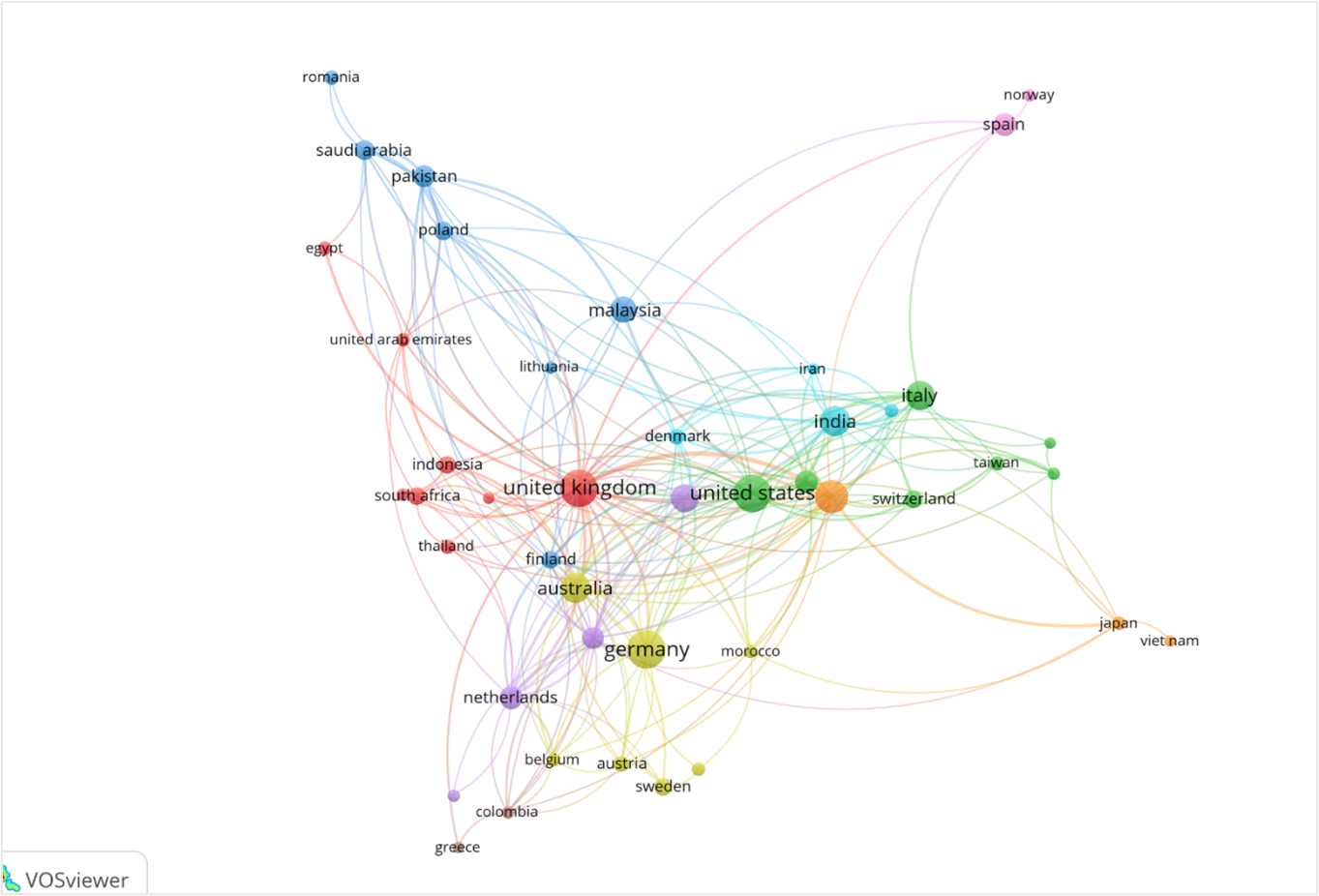
Fig. 2: Top countries collaborating on SL and SP
Source: Authors’ computation from literature (2024)
4.8. Top keyword occurrences on SL and SP research
Table 8 presents the top 20 author keywords by frequency of occurrence and total link strength (TLS) in the domain of sustainable leadership and sustainable performance. The analysis provides insight into the field's thematic focus and intellectual structure, revealing the key areas that dominate scholarly discourse. The keyword "Sustainable development" ranks highest with 292 occurrences and a total link strength of 2539, underscoring its centrality and foundational role in this body of literature. This is followed by "Sustainability" (148 occurrences; TLS = 1092), reinforcing the prominence of broad environmental and social imperatives as core pillars guiding the research agenda. Interestingly, the terms "Sustainability management" and "Sustainability managements" appear as distinct but overlapping entries, each occurring 89 times. While the duplication may stem from inconsistency in author keyword input, the combined total highlights the significance of management-oriented approaches to implementing sustainable practices across organizations. Their high link strengths (599 and 948, respectively) reflect extensive interconnections with other keywords, suggesting their relevance across multiple research clusters. "Corporate social responsibility" (40 occurrences) and "Corporate sustainability" (30 occurrences) also feature prominently, suggesting that business ethics and long-term corporate performance considerations are widely explored. These concepts often intersect with discussions on governance and accountability, particularly about leadership roles.
Keywords directly related to leadership, namely “Sustainable leadership” (35 occurrences), “Leadership” (29), “Ethical leadership” (27), and “Responsible leadership” (21), demonstrate the growing scholarly interest in the behavioral and normative dimensions of leadership for advancing sustainability. Although these terms have lower total link strengths than system-level terms such as "Sustainable development," they remain crucial for exploring the human agency behind sustainable transformation. Further, keywords like “Environmental management” (35), “Environmental performance” (34), and “Environmental impact” (23) highlight the strong ecological orientation of the field. These terms often link sustainability to measurable outcomes, facilitating empirical evaluations of leadership impact. Operational and strategic dimensions are also visible through keywords such as “Supply chain management” (32), “Decision making” (31), and “Innovation” (20), pointing to process-level inquiries into how sustainable performance is integrated into day-to-day business functions. The appearance of “Human resource management” (19) reinforces the role of internal capabilities, particularly talent and employee engagement, in supporting sustainability transitions.
Overall, the keyword network reveals an evolving research field where traditional sustainability concepts coexist with emerging leadership paradigms. The convergence of ecological responsibility, managerial processes, and leadership behavior underscores the field’s multidisciplinary character and reflects the diverse approaches used to investigate how leadership contributes to sustainable performance outcomes.
Table 8: Top keyword occurrences on SL and SP research
| Rank | Author Keywords | Occurrences | TLS |
| 1 | Sustainable development | 292 | 2539 |
| 2 | Sustainability | 148 | 1092 |
| 3 | Sustainability management | 89 | 599 |
| 4 | Sustainability managements | 89 | 948 |
| 5 | Corporate social responsibility | 40 | 242 |
| 6 | Economic and social effects | 37 | 413 |
| 7 | Environmental management | 35 | 366 |
| 8 | Sustainable leadership | 35 | 177 |
| 9 | Environmental performance | 34 | 178 |
| 10 | Supply chain management | 32 | 370 |
| 11 | Decision making | 31 | 374 |
| 12 | Corporate sustainability | 30 | 263 |
| 13 | Leadership | 29 | 227 |
| 14 | Ethical leadership | 27 | 117 |
| 15 | Sustainability performance | 24 | 197 |
| 16 | Corporate sustainability | 23 | 252 |
| 17 | Environmental impact | 23 | 268 |
| 18 | Responsible leadership | 21 | 54 |
| 19 | Innovation | 20 | 191 |
| 20 | Human resource management | 19 | 209 |
Source: Authors’ computation from literature (2024)
Figure 3 presents the keyword co-occurrence network visualized using VOSviewer, which reveals the thematic structure and interconnections among the most frequently used author keywords in the literature on sustainable leadership and sustainable performance. Each node represents a keyword, with node size reflecting the frequency of occurrence and the lines indicating the strength of co-occurrence links with other terms. The color-coded clusters highlight related thematic groupings, offering insights into the conceptual landscape of the field. The green cluster, which centers on the keyword sustainability, emerges as the dominant thematic group. This cluster is densely connected and incorporates key terms such as environmental performance, ethical leadership, sustainable leadership, sustainability performance, and green human resource management. This network underscores the intersection between ecological objectives, leadership behaviors, and organizational outcomes, suggesting a strong focus on how leadership practices contribute to performance outcomes aligned with sustainability goals.
The red cluster revolves around sustainability management and corporate social responsibility, showing a tightly knit relationship with concepts like responsible leadership, sustainable development goals, sustainability accounting, and content analysis. This suggests that research in this area is grounded in strategic and policy-oriented dimensions of sustainability, with attention to stakeholder engagement, reporting practices, and social governance mechanisms. The yellow cluster includes keywords such as supply chain management, transformational leadership, stakeholder theory, and circular economy. This grouping highlights the process and systems-based research focus, particularly on value chain sustainability, innovation, and leadership styles. A literature review and management control systems indicate methodological rigor and interest in synthesis research in this subdomain.
Meanwhile, the blue cluster appears more organization-centric, connecting terms such as corporate sustainability management, financial performance, organizational culture, and strategic management. These terms show how leadership and sustainability are positioned within broader corporate performance and governance contexts. The purple cluster links keywords like integration, transformation, governance, and organizational culture, reflecting sustainability initiatives' organizational change and implementation aspects. This suggests increasing interest in embedding sustainability into corporate structures and practices.
The overall map reveals that the field is multidimensional, bridging environmental, strategic, leadership, and performance-oriented research. The strong linkages between leadership-related terms (ethical, responsible, and transformational leadership) and performance indicators (such as environmental and sustainability performance) reflect a growing scholarly emphasis on the behavioral and managerial antecedents of sustainable outcomes. The clustering pattern further illustrates that the research field is integrative and interdisciplinary, drawing from management, environmental science, leadership studies, and organizational behavior. This network demonstrates that sustainable leadership is not only a peripheral topic but is firmly embedded within the core of sustainability discourse. It is frequently examined alongside strategic management, corporate social responsibility, and environmental accountability, signaling its critical role in shaping sustainable performance agendas within contemporary organizations.
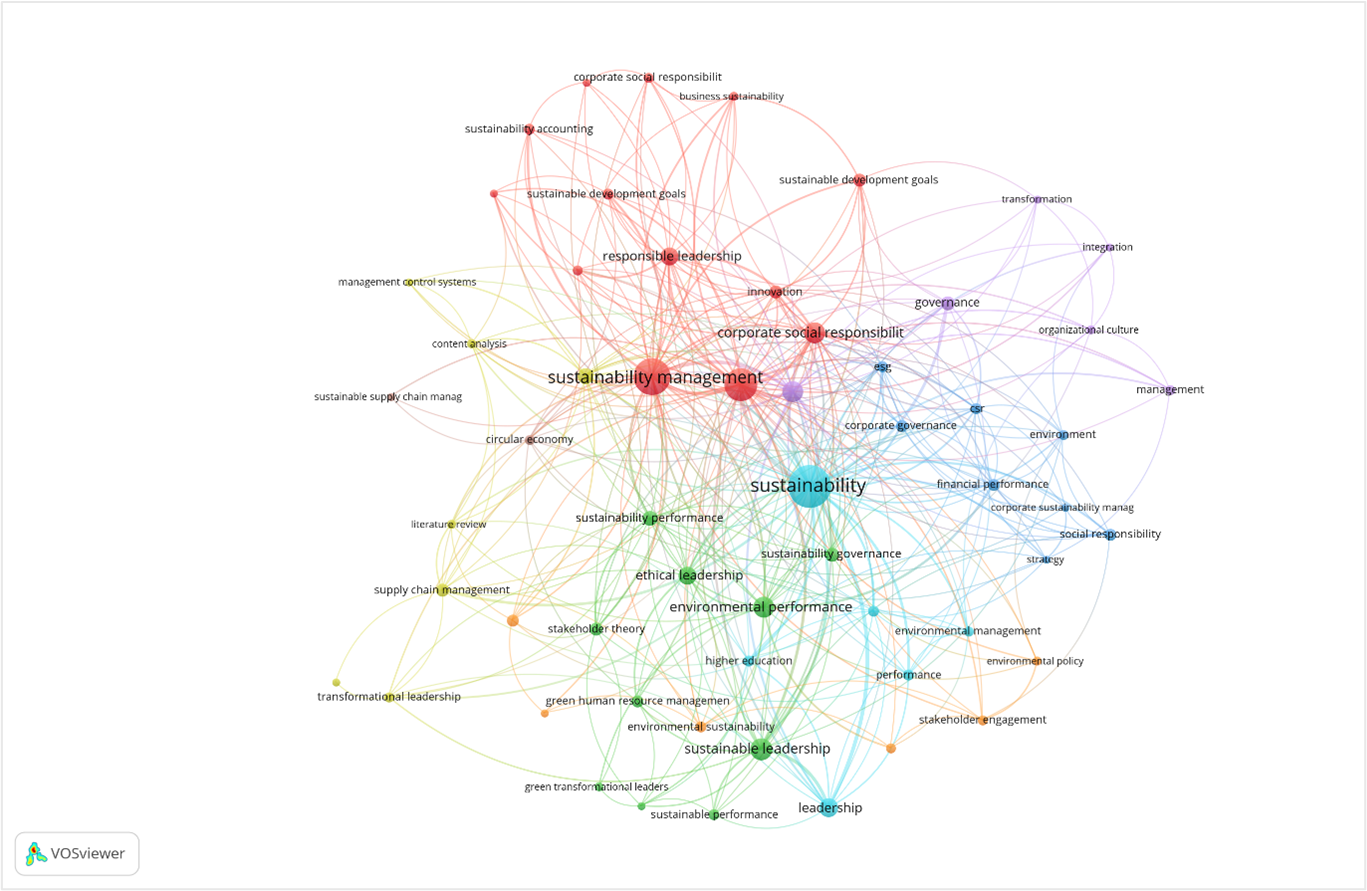
Fig. 3: Top keyword occurrences on SL and SP research
Source: Authors’ computation from literature (2024)
4.9. Top thematic evolution on SL and SP research
Figure 4 presents a thematic evolution map structured into four quadrants based on Callon’s strategic diagram, which plots themes by their centrality (x-axis) and density (y-axis). Centrality indicates the degree of interaction with other themes (relevance), while density reflects the internal strength or development of the theme (maturity). This layout categorizes themes into four groups, including motor themes, niche themes, basic themes, and emerging or declining themes. The motor themes are in the upper-right quadrant, which are well-developed and highly relevant to the field. This includes clusters such as supply chain management, human resource management, project management, and sustainable supply chains. These themes are crucial to the knowledge structure and indicate that operational and strategic management perspectives are foundational in advancing sustainable leadership and performance research. Their high centrality and density suggest that these are driving forces that integrate cross-disciplinary concerns, from logistics to human capital. The upper-left quadrant reflects niche themes such as ethics, resource management, and the United Nations. These themes are highly developed in their own right but are weakly connected to the rest of the thematic network. This indicates specialized research silos with substantial internal focus but limited external integration. Despite being mature, they may not yet strongly influence the broader discourse in sustainable leadership, or they are being explored more in isolated studies or normative frameworks.
In the lower-right quadrant are the fundamental and transversal themes, which include sustainable development, sustainability management, economic and social effects, information management, and leadership. These topics demonstrate high relevance and centrality but lower density, suggesting that they form the conceptual backbone of the field. However, while crucial, the relatively low-density signals in these areas still require deeper theoretical development and refined methodological approaches. The positioning of leadership here confirms its integral but underdeveloped status in sustainability discourse, necessitating future theoretical consolidation and empirical refinement. Finally, the lower-left quadrant represents emerging or declining themes, including big data, corporate social responsibility (CSR) reporting, and corporate social responsibility. These themes are characterized by low centrality and low density, implying either new areas gaining traction or older areas losing relevance. For instance, while CSR has historically been central to sustainability, its current low positioning might reflect a shift in scholarly focus towards more integrated models like ESG or corporate sustainability frameworks.
Interestingly, the terms carbon, pollution control, and cleaner production are positioned at the intersection between niche and motor themes, suggesting rising interest in environmental efficiency but with still-limited integration across broader management contexts. Overall, the thematic map reveals a field in intellectual transition. Operational and managerial constructs such as supply chain management and HRM are solidified as research anchors. At the same time, foundational themes like leadership and sustainability are recognized as vital but need further depth. Meanwhile, legacy terms like CSR may evolve into broader constructs or give way to more systemic approaches to sustainability performance. This dynamic illustrates the importance of aligning leadership models with operational mechanisms and societal outcomes to enhance sustainable performance across organizations.
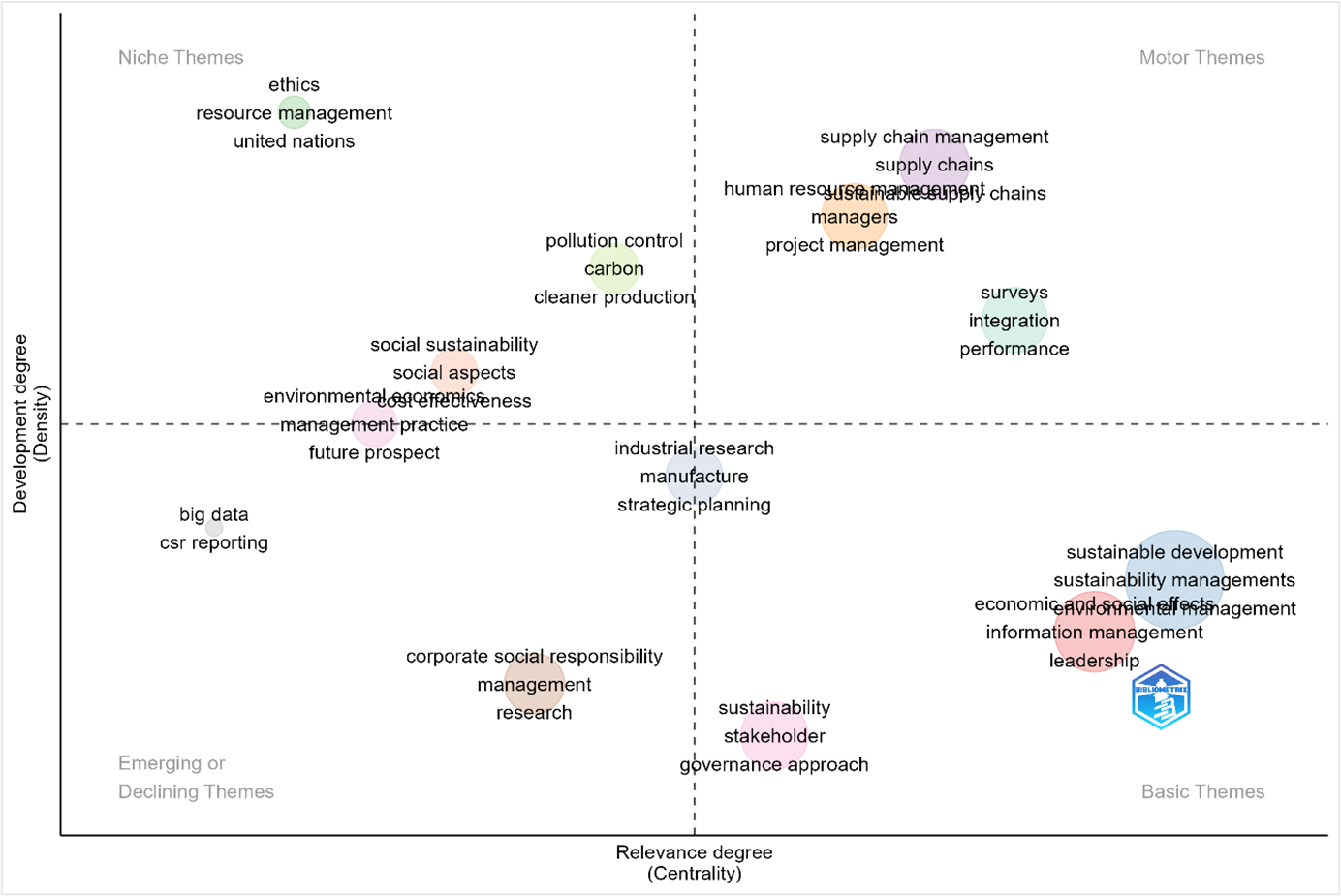
Fig. 4: Thematic evolution map on SL and SP research
Source: Authors’ computation from literature (2024)
5. Discussion
This bibliometric analysis has unveiled critical trends and intellectual structures that inform the evolving relationship between leadership and sustainable performance. Drawing from the theoretical foundations of transformational leadership theory, stakeholder theory, and the resource-based view, the study offers a multi-layered understanding of how leadership influences sustainable outcomes across economic, environmental, and social domains. The prominence of sustainable development, sustainability management, and corporate social responsibility among the most frequently occurring keywords underscores the centrality of these constructs in the scholarly discourse. This is consistent with Freeman's (1984) stakeholder theory, which emphasizes that firms must respond to a broader set of stakeholders beyond shareholders to achieve long-term sustainability. The clustering of keywords such as responsible leadership, ethical leadership, and green human resource management in close proximity to sustainability performance reflects a growing scholarly consensus that leadership styles grounded in moral agency and inclusivity are essential for building sustainable organizations. This reinforces the perspective offered by Maak and Pless (2006), who argued that responsible leadership bridges stakeholders' interests through shared values and long-term vision.
From the transformational leadership theory perspective, the emergence of leadership constructs such as transformational leadership, green transformational leadership, and ethical leadership suggests a shift toward leadership models that inspire, motivate, and model sustainability-oriented behaviors. Bass and Avolio (1994) highlighted that transformational leaders stimulate innovation and change by aligning followers' values with higher-order organizational goals. This appears crucial in sustainability settings, where balancing economic performance with environmental and social responsibilities demands visionary and value-driven leadership. Moreover, the thematic evolution map revealed that leadership, while conceptually relevant, remains underdeveloped compared to more operational themes like supply chain management and project management. This aligns with Barney’s (1991) resource-based view, which positions leadership as an intangible but strategic resource that can confer competitive advantage if it is valuable, rare, inimitable, and organizationally embedded. However, the low density of leadership-related themes suggests that its potential as a dynamic capability for sustainability has not yet been fully explored in empirical literature. This theoretical gap calls for more empirical studies that position leadership not merely as a managerial function but as a transformative driver of sustainability. Additionally, the co-occurrence of terms like corporate sustainability, environmental performance, and decision-making supports the idea that leadership is mediating in translating sustainability strategy into performance outcomes. This resonates with Epstein and Buhovac's (2014) sustainability governance model, which argues that leadership alignment is critical for embedding sustainability into organizational culture, decision structures, and performance metrics.
In a nutshell, this discussion confirms that leadership is not only a behavioral construct but a strategic resource that is increasingly central to sustainability management. While traditional theories like stakeholder theory provide normative justification, transformational and resource-based perspectives explain how leadership can be leveraged to enhance sustainable performance. The bibliometric findings suggest that future research operationalize leadership more rigorously, expand the empirical scope beyond developed countries, and explore interdisciplinary intersections that capture leadership’s role in driving systems-level change.
6. Conclusions and future research directions
This bibliometric review has revealed several promising avenues for advancing theoretical and empirical inquiry at the intersection of leadership and sustainable performance. While existing research has made substantial progress in exploring concepts such as corporate social responsibility, sustainability management, and ethical leadership, significant gaps remain in the literature's depth, scope, and contextual diversity. Thus, a new research agenda must combine theoretical innovation, methodological rigor, and contextual sensitivity. This will allow scholars to understand better how leadership can drive transformative change, supporting global sustainability goals. First, future research should deepen the theorization of leadership as a strategic resource for sustainability, building more explicitly on the resource-based view (RBV). Although leadership has been acknowledged as an intangible asset, few empirical studies have examined how specific leadership competencies contribute to sustained environmental or social performance. There is a need to develop robust constructs that capture leadership's role in shaping dynamic capabilities for sustainability, particularly in volatile or resource-constrained environments (Barney, 1991). This can include exploring how strategic leadership influences integrating sustainability metrics into performance management systems and governance structures.
Second, the findings suggest that sustainability performance studies' transformational and ethical leadership models remain underutilized. Future research should therefore expand the application of transformational leadership theory (Bass & Avolio, 1994) by investigating how leaders inspire sustainability-oriented behaviors at different organizational levels, especially in SMEs, the public sector, or informal economies. Empirical studies could use longitudinal or mixed-method approaches to examine how transformational leaders influence employee engagement, innovation adoption, and institutional transformation to achieve sustainable goals. Third, as suggested by the prominence of stakeholder-related keywords in the co-occurrence analysis, more research is needed that applies stakeholder theory to assess leadership’s mediating role in stakeholder engagement, legitimacy building, and value co-creation. Given that sustainability requires reconciling multiple stakeholder interests (Freeman, 1984), future work could examine how leaders manage tensions among economic, environmental, and social imperatives in different institutional and cultural contexts.
Fourth, there is a notable geographic bias in existing literature, with a concentration of studies from Western economies. Future research should broaden its scope to include emerging and developing countries, particularly Africa, Latin America, and Asia, where governance gaps, inequality, and weak institutions often compound sustainability challenges. Comparative cross-country studies could yield insights into how contextual factors mediate the effectiveness of different leadership styles in advancing sustainability. Fifth, as the thematic evolution map showed the clustering of sustainability with adjacent but siloed constructs like human resource management, supply chain management, and innovation, future studies should adopt interdisciplinary approaches that link leadership with broader sustainability governance systems. For example, integrating leadership theory with environmental economics, institutional theory, or systems thinking could provide holistic frameworks to understand leadership's impact on long-term sustainable performance. Finally, the field would benefit from developing new measurement tools and conceptual models that operationalize sustainable leadership more precisely. Future studies could draw from Epstein and Buhovac’s (2014) sustainability governance model to create integrated frameworks that capture the relationship between leadership values, stakeholder engagement strategies, and triple bottom line outcomes.
References
Abdul-Rashid, S. H., Sakundarini, N., Raja Ghazilla, R. A., & Thurasamy, R. (2017). The impact of sustainable manufacturing practices on sustainability performance: Empirical evidence from Malaysia. International Journal of Operations and Production Management, 37(2), 182–204. https://doi.org/10.1108/IJOPM-04-2015-0223
AftabJ., Abid, N., Sarwar, H., & Veneziani, M. (2022). Environmental ethics, green innovation, and sustainable performance: Exploring the role of environmental leadership and environmental strategy, Journal of Cleaner Production, 378. https://doi.org/10.1016/j.jclepro.2022.134639
Agyabeng-Mensah, Y., Baah, C., Afum, E., & Kumi, C. A. (2023). Circular supply chain practices and corporate sustainability performance: Do ethical supply chain leadership and environmental orientation make a difference? Journal of Manufacturing Technology Management, 34(2), 213-233.
Ali, J., Jusoh, A., Idris, N., Nor, K. M., Wan, Y., Abbas, A. F., & Alsharif, A. H. (2022). Applicability of healthcare service quality models and dimensions: Future research directions. The Journal of Total Quality Management, 13(11), 6488.
Aria, M., & Cuccurullo, C. (2017). Bibliometrix: An R tool for comprehensive science mapping analysis. Journal of Informetrics, 11(4), 959–975. https://doi.org/10.1016/j.joi.2017.08.007
Asa, A. R., Nautwima, J. P., & Khom-Oabes, J. (2023). The role of strategic change management in enhancing academic institutions’ sustainability. The International Journal of Management Science and Business Administration, 9(3), 41–53. https://doi.org/10.18775/ijmsba.1849-5664-5419.2014.93.1004
Asa, A. R., Nautwima, J. P., & Villet, H. (2024). An integrated approach to sustainable competitive advantage. Cutter Business Technology Journal, 25(1), 201–222. https://doi.org/https://doi.org/10.33736/ijbs.6907.2024
Asa, A. R., Yusupov, S., & Nautwima, J. P. (2023). Harnessing the power of mergers and diversification: The success story of Meituan-Dianping. The International Journal of Management Science and Business Administration, 9(4), 42–51. https://doi.org/10.18775/ijmsba.1849-5664-5419.2014.94.1004
Asa, R. A., Campbell, H., & Nautwima, J. P. (2022). A critical review of organizing knowledge management for innovation. The International Journal of Management Science and Business Administration, 8(2), 7–15. https://doi.org/10.18775/ijmsba.1849-5664-5419.2014.82.1001
Asad, M.; Asif M.U.; Allam Z.; Sheikh U.A.(2021). A Mediated Moderated Analysis of Psychological Safety and Employee Empowerment between Sustainable Leadership and Sustainable Performance of SMEs. International Conference on Sustainable Islamic Business and Finance, SIBF 2021. https://www.scopus.com/inward/record.uri?eid=2-s2.0
Bendell, J., Sutherland, N., & Little, R. (2017). Beyond unsustainable leadership: critical social theory for sustainable leadership. Sustainability Accounting, Management and Policy Journal, 8(4), 418–444. https://doi.org/10.1108/SAMPJ-08-2016-0048
Burawat, P. (2019). The relationships among transformational leadership, sustainable leadership, lean manufacturing, and sustainability performance in Thai SMEs manufacturing industry. International Journal of Quality and Reliability Management, 36(6), 1014–1036. https://doi.org/10.1108/IJQRM-09-2017-0178
Cesário, F. J. S., Sabino, A., Moreira, A., & Azevedo, T. (2022). Green human resources practices and person-organization fit: The moderating role of the personal environmental commitment. Journal of Emerging Science, 6(5), 938-951.
Cobo, M. J., López-Herrera, A. G., Herrera-Viedma, E., & Herrera, F. (2011). An approach for detecting, quantifying, and visualizing the evolution of a research field: A practical application to the Fuzzy Sets Theory field. Journal of Informetrics, 5(1), 146–166. https://doi.org/10.1016/j.joi.2010.10.002
Donthu, N., Kumar, S., Mukherjee, D., Pandey, N., & Lim, W. M. (2021). How to conduct a bibliometric analysis: An overview and guidelines. Journal of Business Research, 133, 285–296. https://doi.org/10.1016/j.jbusres.2021.04.070
Dyllick, T., & Muff, K. (2016). Clarifying the meaning of sustainable business: Introducing a typology from business-as-usual to true business sustainability. Organization & Environment, 29(2), 156–174.
Huo, C., Safdar, M. A., & Ahmed, M. (2023). Impact of responsible leadership on sustainable performance: a moderated mediation model. Kybernetes, 53(12), 5263–5284. https://doi.org/10.1108/K-03-2023-0342
Iqbal, Q., & Piwowar-Sulej, K. (2023). Frugal innovation embedded in business and political ties: transformational versus sustainable leadership. Asian Business & Management, 22(5), 2225-2248.
Iqbal, Q., Ahmad, N. H., & Ahmad, B. (2019). Enhancing sustainable performance through job characteristics via workplace spirituality: A study on SMEs. Journal of Science and Technology Policy Management, 12(3), 463–490. https://doi.org/10.1108/JSTPM-02-2018-0022
Iqbal, Q., Ahmad, N. H., & Halim, H. A. (2020). How does sustainable leadership influence sustainable performance? Empirical evidence from selected ASEAN countries. Sage Open, 10(4), 2158244020969394.
Iqbal, Q., Ahmad, N. H., & Halim, H. A. (2020). How does sustainable leadership influence sustainable performance? Empirical evidence from selected ASEAN countries. SAGE Open, 10(4). https://doi.org/10.1177/2158244020969394
Iqbal, Q., Ahmad, N. H., & Li, Y. (2021). Sustainable leadership in Frontier Asia region: managerial discretion and environmental innovation. Sustainability, 13(9), 5002.
Jusoh, A., Abbas, A. F., & Latif, H. A. (2024). Exploring sustainable leadership: trends and insights from a bibliometric analysis in business and management. International Journal of Business and Society, 25(Special Issue), 113–126. https://doi.org/10.33736/ijbs.8206.2024
Jusoh, A., Abbas, A. F., Latif, H. A. (2024). Exploring sustainable leadership: Trends and insights from a bibliometric analysis in business and management. International Journal of Business and Society, 25, 113–126.
Kantabutra, S., & Thepha-Aphiraks, T. (2016). Sustainable leadership and consequences at Thailand's Kasikornbank. International Journal of Business Innovation and Research, 11(2), 253–273.
Liao, Y. (2022). Sustainable leadership: A literature review and prospects for future research. Frontier in Psychology. 13:1045570. doi: 10.3389/fpsyg.2022.1045570
Liao, Y. (2022). Sustainable leadership: A literature review and prospects for future research. Frontiers in Psychology, 13(November), 1–11. https://doi.org/10.3389/fpsyg.2022.1045570
Milezi, J., Asa, A. R., Nautwima, J. P., & Obrenovic, B. (2023). Assessing the impact of management practices on organizational growth at a multinational company in Namibia. International Journal of Operations Management, 3(2), 22–34. https://doi.org/10.18775/ijom.2757-0509.2020.32.4002
Nautwima, J. P., Asa, A. R., & Atiku, S. O. (2023). Testing unemployment–entrepreneurship nexus in Namibia using the Schumpeterian approach. Sustainability (Switzerland), 15(18), 1–15. https://doi.org/10.3390/su151814023
Nguyen, T. L. (2019). STEAM-ME: A Novel Model for successful Kaizen implementation and sustainable performance of SMEs in Vietnam. Complexity, 2019. https://doi.org/10.1155/2019/6048195
Nisha, N. T., Nawaz, N., Mahalakshmi, J., Gajenderan, V., & Hasani, I. (2022). A Study on the impact of sustainable leadership and core competencies on sustainable competitive advantage in the Information Technology (IT) sector. Sustainability (Switzerland), 14(11). https://doi.org/10.3390/su14116899
Piwowar-Sulej, K., & Iqbal, Q. (2023). Leadership styles and sustainable performance: A systematic literature review. Journal of Cleaner Production, 382,134600. doi: https://doi.org/10.1016/j.jclepro.2022.134600
Piwowar-Sulej, K., & Iqbal, Q. (2023). Leadership styles and sustainable performance: A systematic literature review. Journal of Cleaner Production, 382(January 2022), 134600. https://doi.org/10.1016/j.jclepro.2022.134600
Purnomo, A., Septianto, A., Anam, F., Rahmayanti, A., & Wiyono, M. (2021). Sustainable leadership: A scientific literature positioning using scientometric analysis. Proceedings of the International Conference on Industrial Engineering and Operations Management, 1814–1824. https://doi.org/10.46254/an11.20210340
Suriyankietkaew, S. (2022). Effects of key leadership determinants on business sustainability in entrepreneurial enterprises. Journal of Entrepreneurship in Emerging Economies, 8(4), 327.
Tjizumaue, B., Samuel, S., Nautwima, J. P., & Asa, A. R. (2023). Factors influencing consumer preference among beverage product brands in Namibia. International Journal of Innovation and Economic Development, 9(3), 7–24. https://doi.org/10.18775/ijied.1849-7551-7020.2015.93.2001
Udin, U. (2024). Leadership styles and sustainable performance. Multidisciplinary Reviews, 7(8). https://doi.org/10.31893/multirev.2024171
Waqar, A., Houda, M., Khan, A. M., Qureshi, A. H., & Elmazi, G. (2024). Sustainable leadership practices in construction: Building a resilient society. Environmental Challenges, 14(January), 100841. https://doi.org/10.1016/j.envc.2024.100841
Zimek, M., & Baumgartner, R. (2017). Corporate sustainability activities and sustainability performance of first and second order. 18th European Roundtable on Sustainable Consumption and Production Conference (ERSCP 2017) Corporate, 15(October). https://www.researchgate.net/profile/Martina-Zimek/publication/320612163_Corporate_sustainability_activities_and_sustainability_performance_of_first_and_second_order/links/59f04412aca272a250014539/Corporate-sustainability-activities-and-sustainability-per